Surf camp · Ahangama · Sri Lanka

Surf camp in Sri Lanka, built around one all-inclusive surf & yoga week

Sunshinestories is a small surf camp and surf retreat in Ahangama on the south coast of Sri Lanka. Every week is the same simple format: Sunday to Sunday, all-inclusive, with surf lessons, surf coaching, daily yoga, home-cooked Sri Lankan food and a bed in our hundred-year-old colonial villa or one of the garden bungalows.

One package, one price — from 975 EUR per person per week — so you can stop comparing surf camps in Sri Lanka and just book the week. Below you will also find our surf break guide to the five waves we surf most: Marshmellows, Lazy Left, Weligama Bay, Rams Right and The Rock.

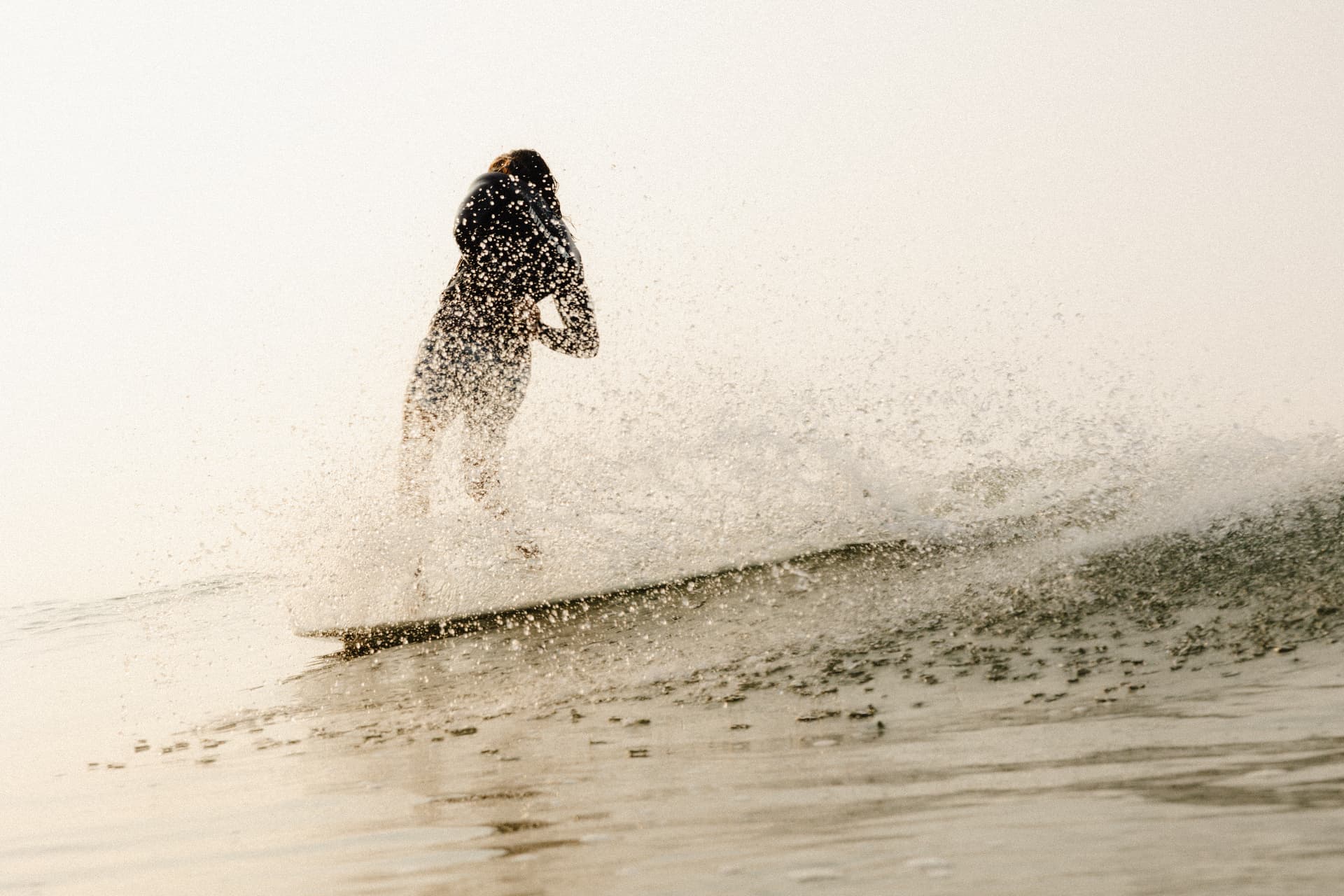
Surfer carving through backlit spray at a surf break near our surf camp in Ahangama, Sri Lanka

Surfing is meant to be fun

We believe people learn best when they’re having fun. Surfing can be challenging, frustrating, exhilarating and slightly ridiculous — sometimes all in the same session. Our job is to make sure you leave the water smiling, while quietly helping you become a much better surfer along the way.

That philosophy sits at the heart of our surf camp in Ahangama. Whether it’s your first time standing on a surfboard or you’ve travelled to Sri Lanka with a board bag full of favourites, we want every session to feel like something you’re excited to paddle out for. Our approach is built around positive sports coaching: encouragement, confidence and progression rather than pressure. We celebrate the first whitewater ride just as much as the first proper turn.

We keep our surf coaching groups small, with a maximum 5:1 surfer-to-coach ratio, and we adapt the coaching to your individual progression so you get as much as possible from every session — even when you’re surfing as part of a group.

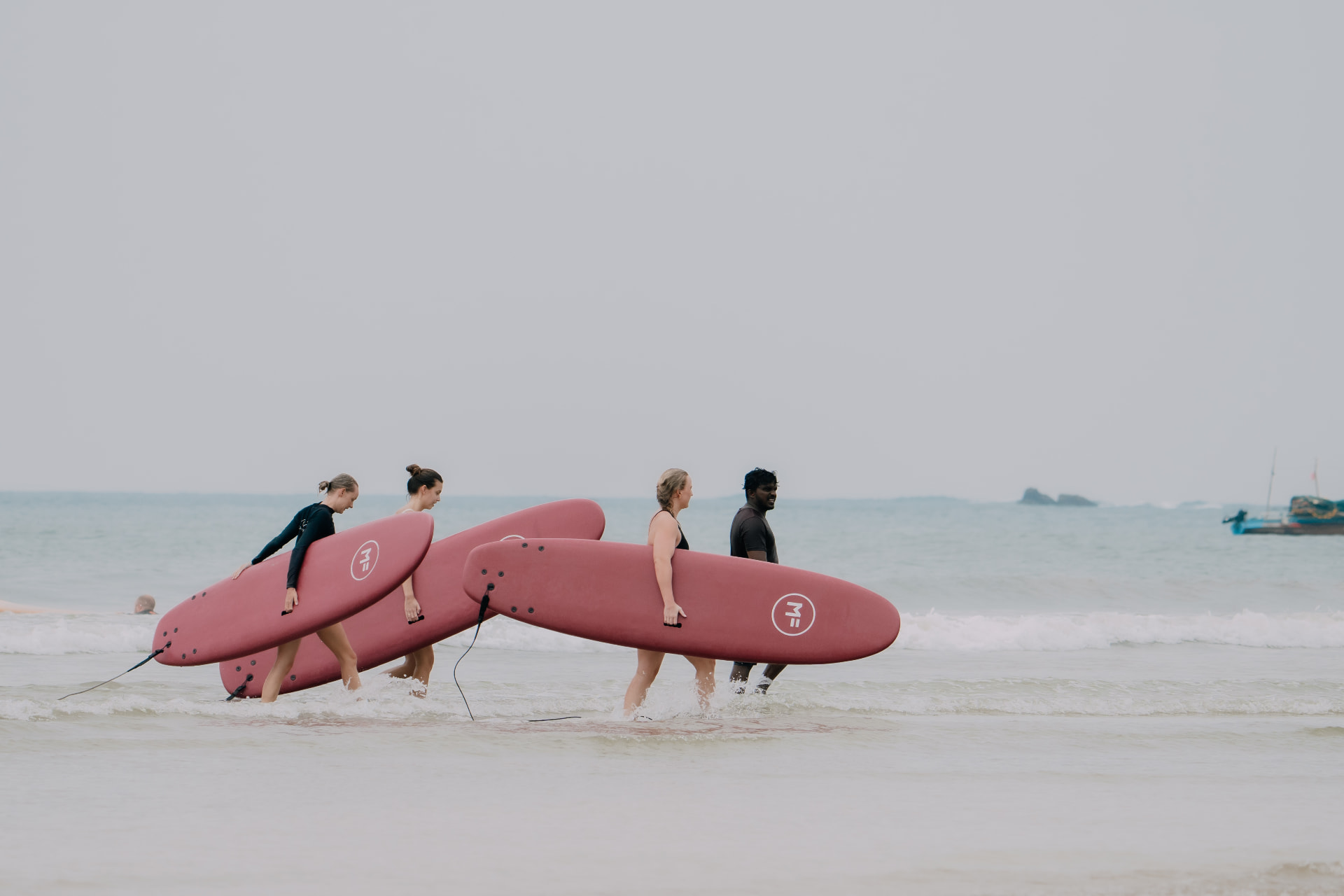
Guests carrying soft-top surfboards into the ocean during a beginner surf lesson in AhangamaGuests practising surf pop-ups on the beach at sunrise during a surf camp lesson

What a week of surf coaching looks like

Your week includes five surf sessions with our certified coaches, surf theory and video analysis, so you can actually see what your body is doing on the wave. Every session has a purpose — paddling, positioning, reading waves, generating speed, trimming down the line, refining turns — and your coach will explain why you are working on it, so you leave Sri Lanka able to keep progressing wherever you surf next.

Our coaches are in the water with you, not shouting from the beach. The team is Sri Lankan and grew up surfing these reefs: Kavi, our head surf coach, is a multiple longboard competition winner, and senior coaches Mathi and Situ are members of the national surfing team. That local knowledge of breaks, reefs, winds and tides is what decides where we surf each morning.

Boards are included. Our quiver holds more than 40 surfboards, from forgiving beginner boards through to advanced alternative shapes and single-fin longboards, and at level 3 we coach both shortboard and longboard. Transport to whichever break is working is included too — usually a tuk-tuk convoy with boards strapped to the roof.

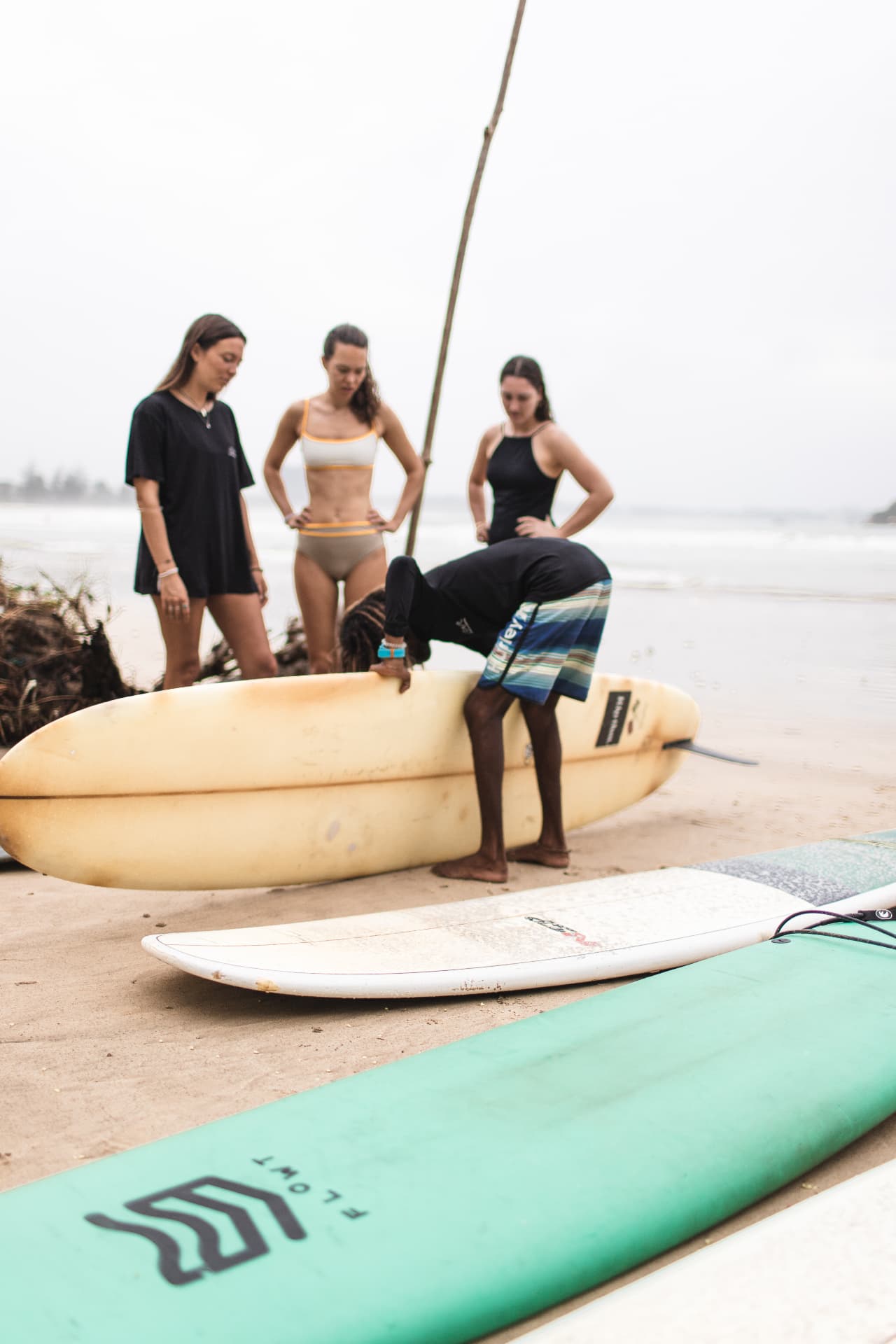
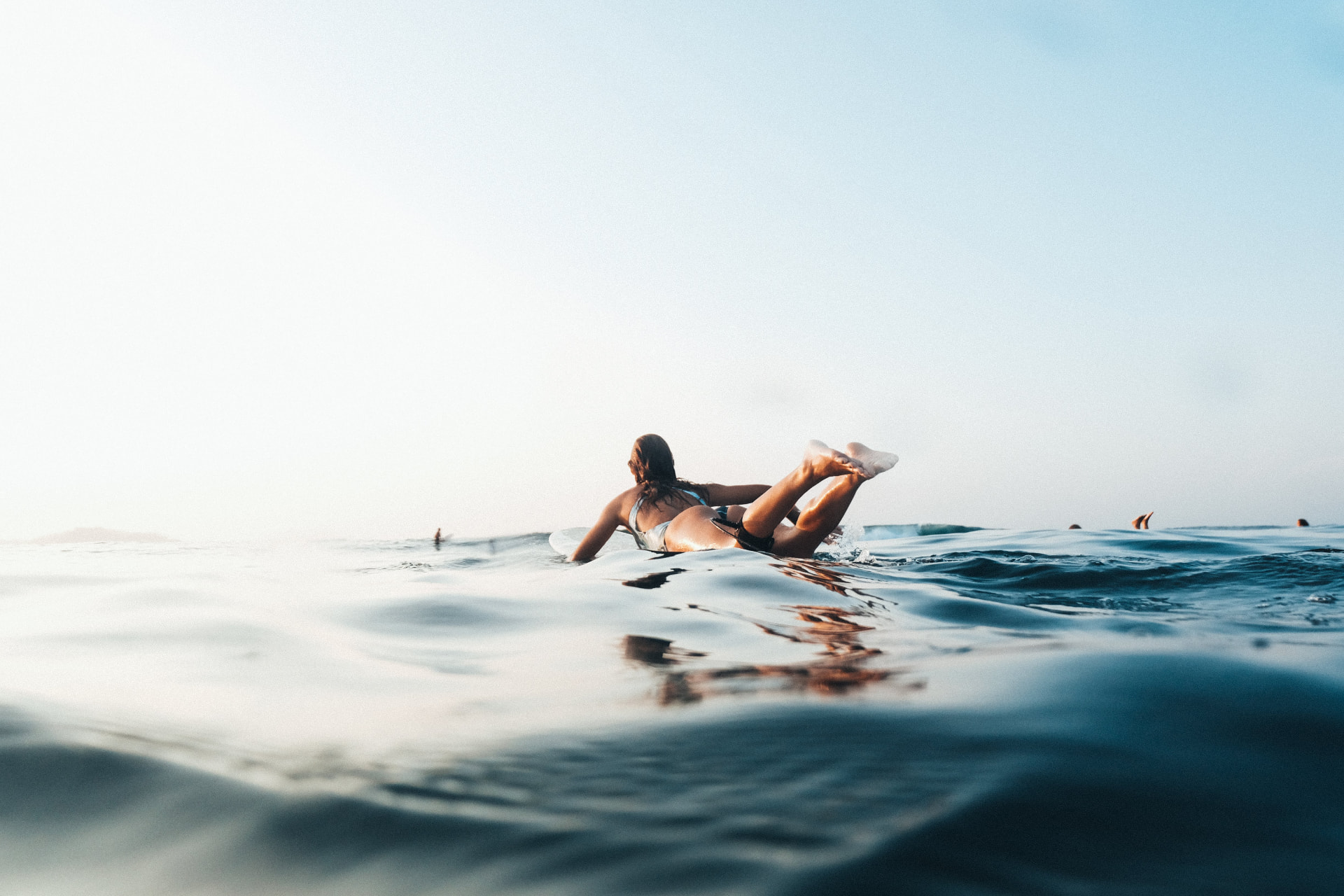
Sri Lankan surf coach running a beach briefing with guests and surfboardsSurfer paddling out over glassy morning water on Sri Lanka's south coastGuest gliding down the line on a clean wave during a surf coaching session

Surf break guide

Our surf break guide to Ahangama, Midigama and Weligama

One of the best things about surfing this stretch of Sri Lanka’s south coast is how many different waves sit within a short tuk-tuk ride: sand-bottom beach breaks for your first session, deep forgiving reefs for your first proper wall, and shallow, hollow slabs for the surfers who want to be scared in a good way. Mornings are usually offshore and glassy, which is why our sessions start early.

Here are the five breaks we surf most with guests, and who each one suits. Where we take you on any given day depends on the swell, wind, tide and — most importantly — your level.

1. Marshmellows

Deep-water reef · A-frame, lefts and rights · Beginner to intermediate · Ahangama — a few minutes from the villa

Marshmellows is the wave that gives most of our guests their first proper reef experience, and it is about as friendly as a reef gets. The name is earned: the reef sits roughly two metres under the surface, so instead of dumping, the wave crumbles and rolls, giving you a slow, generous take-off and long rides of 50 to 150 metres.

It is a deep-water A-frame, which means one peak throws both a left and a right, and on a normal day the swell spreads across several peaks so a group can spread out rather than fight over one spot. It is a longboarder's favourite and an ideal graduation step from the sand of Weligama.

A word of honesty: the paddle out from the beach is long, and on swells over about four feet Marshmellows stops being mellow — the wall stands up, the take-off goes steep and it becomes a wave for confident surfers only. That is exactly the kind of call your coach makes for you each morning.

2. Lazy Left

Deep reef · Long left-hander · Improver to advanced · Midigama — around 15 minutes by tuk-tuk

Lazy Left is exactly what it sounds like: a mellow, peeling left over a deep reef that holds up to five or six foot on a good day. Rides of a few hundred metres are normal here, and because the reef is deep, wipeouts are forgiving.

It is one of the most predictable waves on the coast, which makes it a brilliant first reef break as well as a place for intermediate surfers to work on trimming, drawing out turns and linking sections. Goofy-footers fall in love with it immediately.

Unusually for the region, Lazy's tends to work best around low tide, so it often gives us an option when other spots have gone fat. Directly across the channel sits Lazy Right, a softer, wider reef that we use for improvers on smaller swells.

3. Weligama Bay

Sand-bottom beach break · Long crescent bay · Absolute beginners · Weligama — around 20 minutes by tuk-tuk

Weligama Bay is the classroom of Sri Lanka's south coast, and it is the reason so many people stand up on their very first day. The bay stretches more than three kilometres between two headlands, which refracts the Indian Ocean swell into slow, long, low-power waves.

The whole learning zone is sand — no reef, no rocks — so falling off is soft, and much of it is shallow enough to walk your board back out rather than paddle against a current. Water sits around 27–29°C, so there are no wetsuits, just boardshorts, zinc and a rash vest.

We take complete beginners here for their first sessions, then move them east towards the reefs as their paddling and wave reading come together during the week.

4. Rams Right

Shallow coral reef · Fast, hollow right · Advanced · Midigama — around 15 minutes by tuk-tuk

Rams is widely considered the best-quality wave in the Midigama area: a short, fast, hollow right that breaks over shallow coral and, on the right swell, throws a genuine barrel. Rides can run a few hundred metres when the sections link.

It has power and it has consequences — the reef is shallow and unforgiving — so this is a spot for experienced surfers, and one we surf together with a coach in the water rather than sending anyone out alone.

It works best on a mid south-southwest swell with an offshore north wind, which in practice means early mornings during the south-coast season.

5. The Rock

Exposed reef A-frame · Steep lefts and rights · Advanced · Kabalana, Ahangama — around 10 minutes away

The Rock sits at the end of Kabalana beach, marked by the unmistakable rock formation just offshore. It is an exposed reef A-frame that can serve up big, hollow waves — the left is the longer, more open ride, while the rights are shorter and punchier.

It is one of the most consistent quality waves in Ahangama, working across all stages of the tide, best with a south-southwest swell and a north-northeasterly offshore. January is statistically its cleanest month.

When the swell is pumping, The Rock draws a crowd of good surfers and sea urchins live on the reef below, so booties and local knowledge both help. If the conditions are right for you, our coaches will happily paddle out with you; if they are not, Kabalana's sandy peaks next door are usually fun anyway.

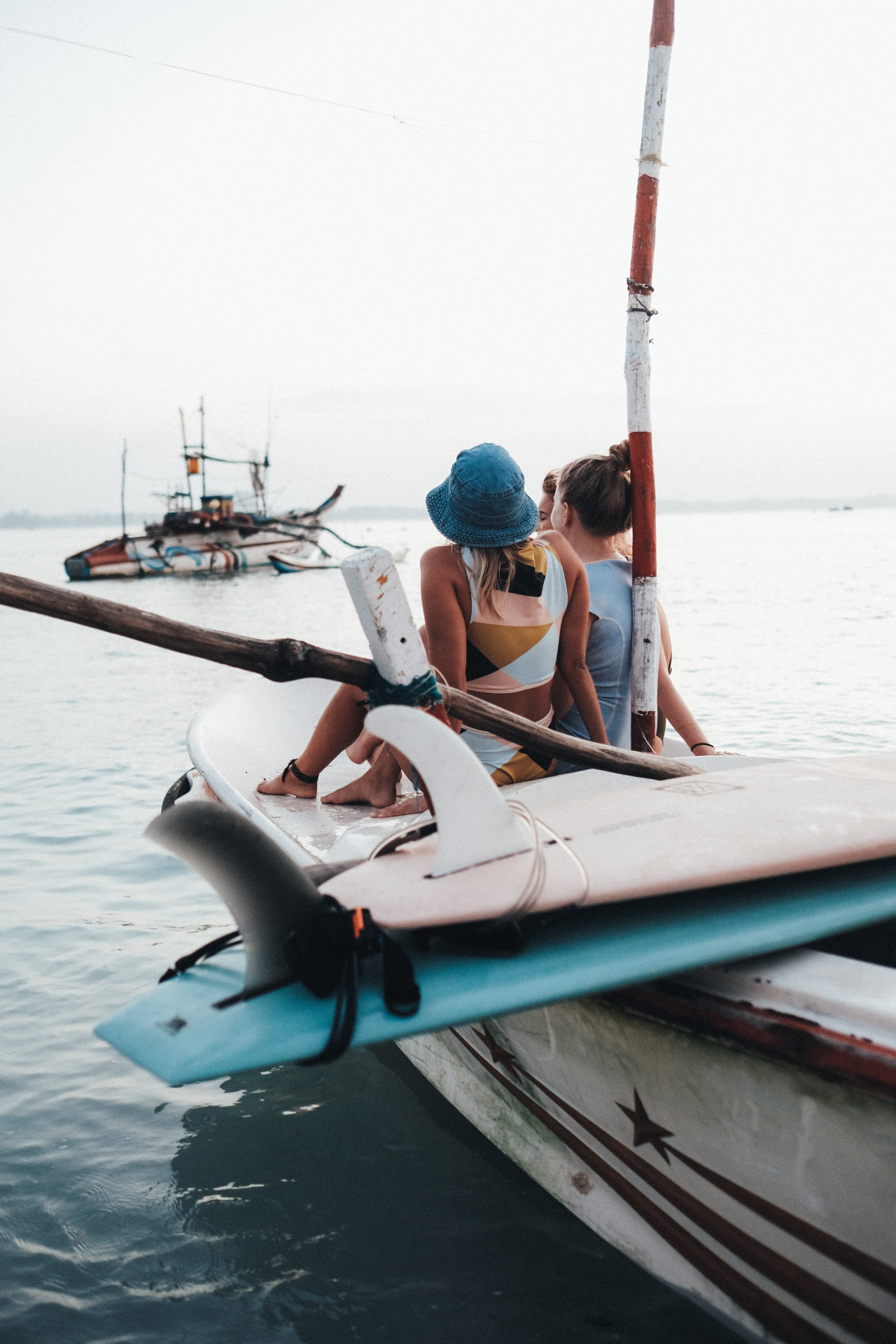
Longboarder noseriding a long peeling wave at a reef break near AhangamaSurfers and boards on a traditional fishing boat heading to a Sri Lankan surf breakGuest throwing a shaka while riding a wave on Sri Lanka's south coast

South coast in winter, east coast in summer

Sri Lanka is one of the few countries where you can surf all year. The south coast around Ahangama, Weligama, Midigama, Kabalana, Mirissa and Galle is at its best from November to April, with clean morning offshores and water warm enough to surf in boardshorts. From May to October the east coast near Arugam Bay switches on, and the south still delivers glassy, quiet early mornings in the sheltered bays.

We run our surf camp weeks year-round and simply move with the conditions, which is why guests keep calling us the best surf camp in Sri Lanka for a first trip — and keep coming back for a second, third and fourth week.

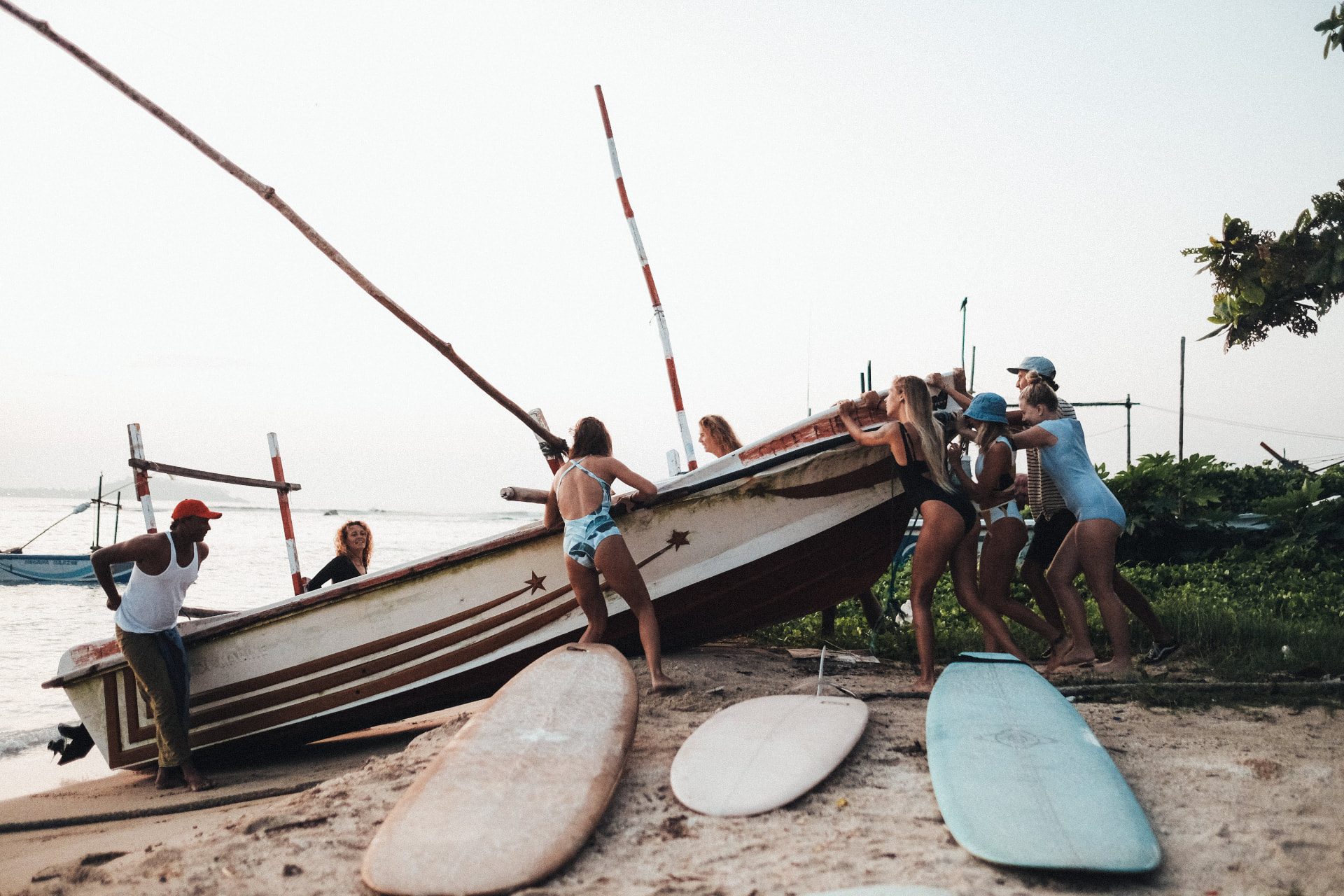
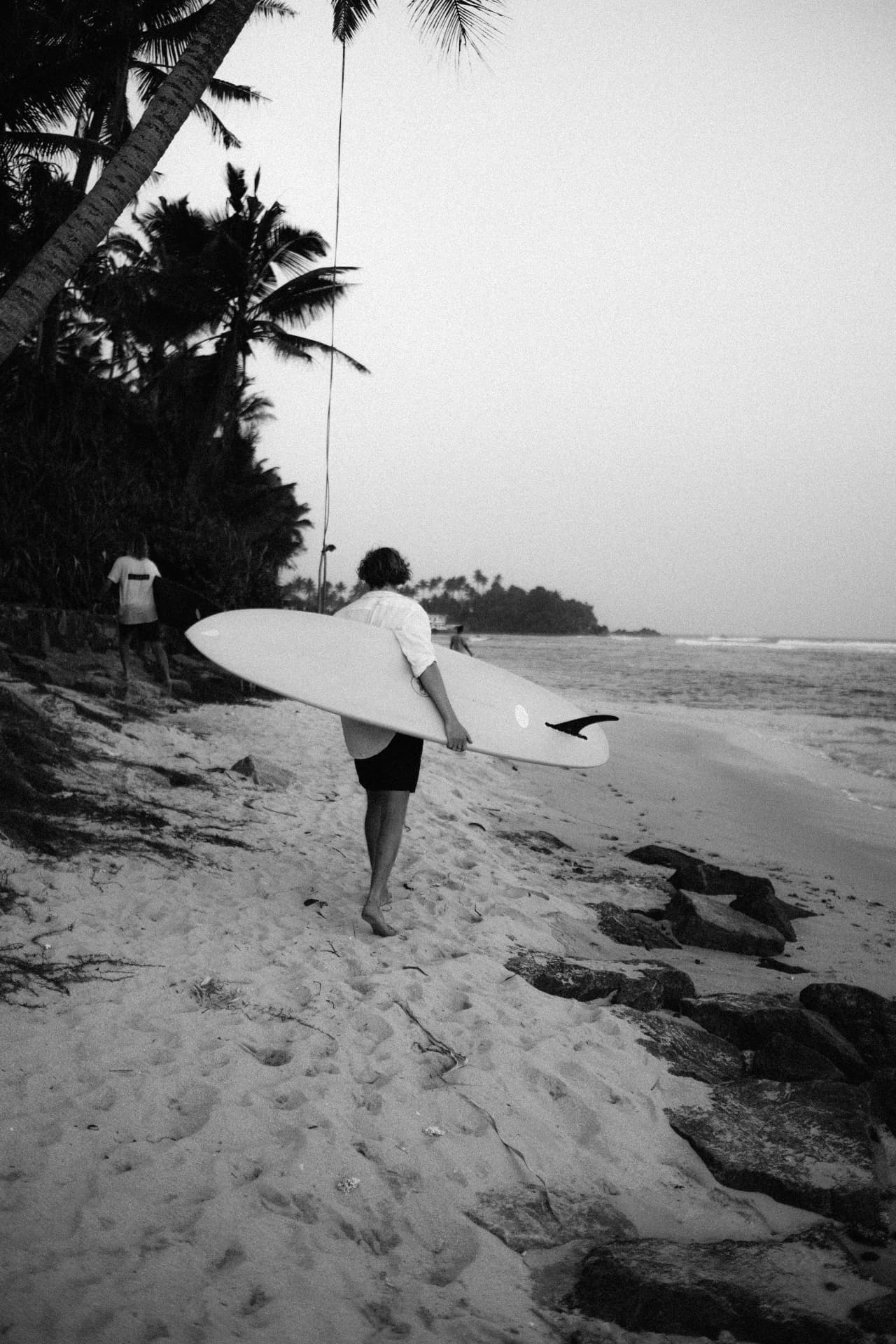
Pushing a fishing boat out at dawn on the south coast of Sri LankaSurfer carrying a longboard down a palm-lined beach in Ahangama

More than the surf

The week is all-inclusive for a reason: after the morning session there is daily yoga in the shala, home-cooked Sri Lankan food, a pool under the palms, mini adventures around the south coast and evenings that tend to run long around the dinner table. Everything happens from our old Dutch colonial villa, a short walk from the beach and the village.

Rooms range from garden bungalows to rooms in the old villa and two dorms, and any room can be made private for an extra 300 EUR per week. Stay two weeks and the additional week is 20% off.

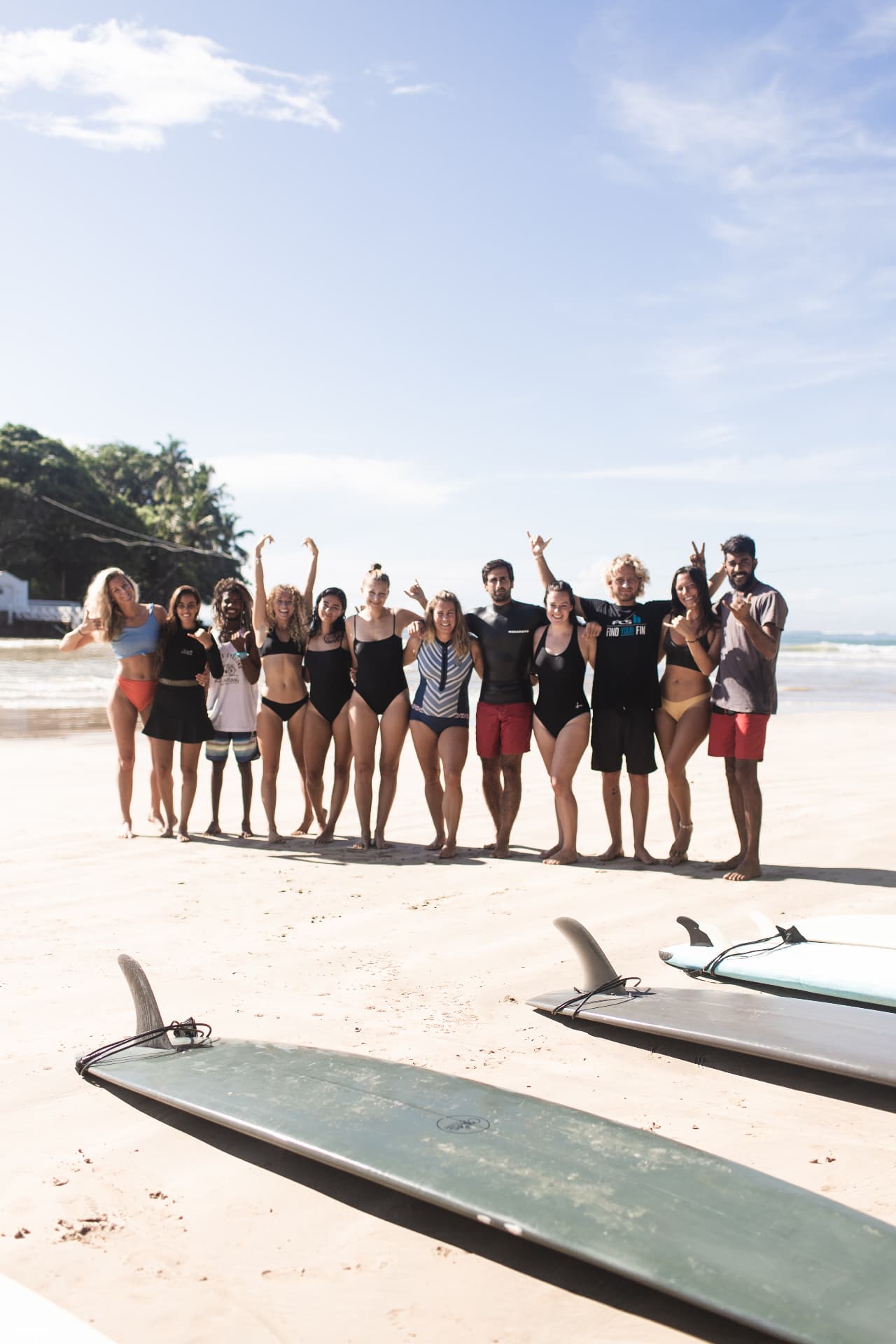
Surf camp guests gathered on the beach with surfboards after a sessionGroup of guests and surf coaches lined up with boards on the shoreline in AhangamaSurfer throwing spray on a clean wave during a surf retreat week in Sri Lanka

Keep exploring